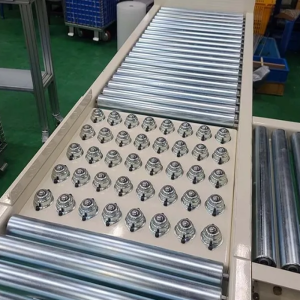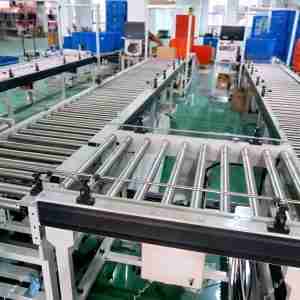
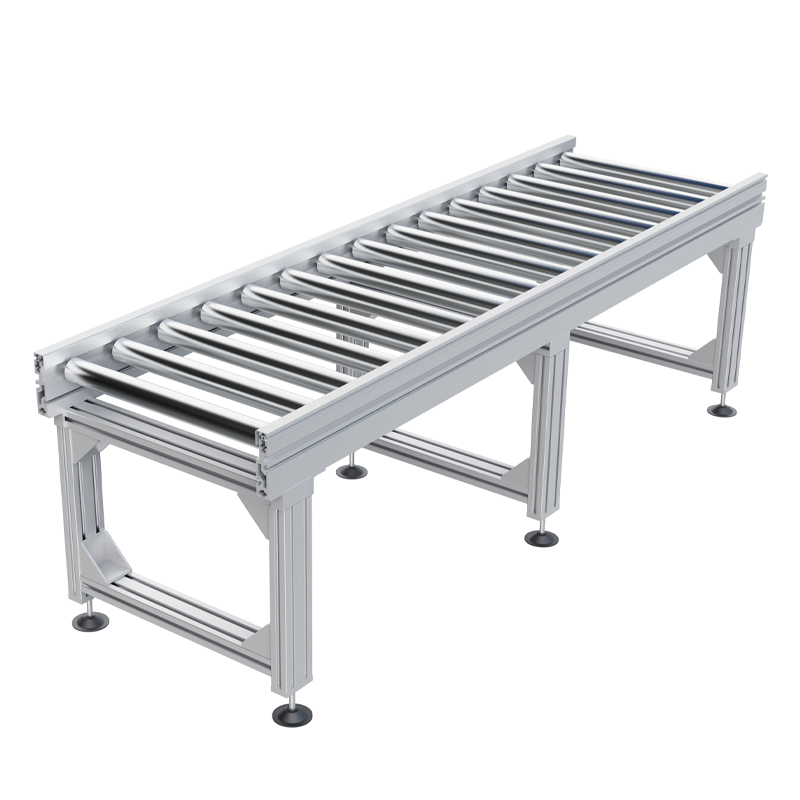
Aluminum extrusion roller conveyor adopts premium aluminum profiles as the main frame. Lightweight structure brings flexible assembly and neat appearance, fit for light and medium load material handling in production and logistics scenarios.
Descrizione
Trasportatore a rulli per estrusione di alluminio
The roller conveyor line refers to a machine. This conveyor suits cartons, sacchi, and palletized goods transportation. Irregular small items need to be placed on pallets or containers for stable conveying. It can bear moderate impact load, run stably, and perform easy daily operations.

Roller Conveyor Specifications:
Model Conveyor Length L Conveyor Width W Conveyor Height H Roller Spacing P
TOSH-RL-F L≥600mm 100~1200mm As needed As needed
Caratteristiche del prodotto:
- Struttura semplice e affidabile con bassa manutenzione.
- Diametri dei rulli: φ38, φ50.6, φ60, φ76, φ80, φ89… selezionabili in base alle esigenze.
- Conveys via rollers made of materials such as carbon steel, acciaio inossidabile, plastica, eccetera. Le opzioni di superficie includono il rivestimento in gomma, selezionabile secondo necessità.
- T-slot aluminum profiles frame for easy accessory attachment
- Maximum load of up to 1000kg/m, in grado di sopportare carichi di impatto significativi, soddisfare le diverse esigenze di trasporto.
- Adatto per trasporto ad accumulo.
- Lightweight aluminum frame equipped with standard T-slot, convenient for accessory installation and layout adjustment
- Compact solid structure, fewer wearing parts, low daily maintenance cost
- Diversified roller specifications match different load weights and working environments
- Rubber-coated roller optional, effectively anti-slip, and reduces running noise
- Strong bearing capacity, supports continuous accumulation conveying work
- Modular splicing design, quick on-site assembly, and flexible layout change
Descrizione dimensionale:
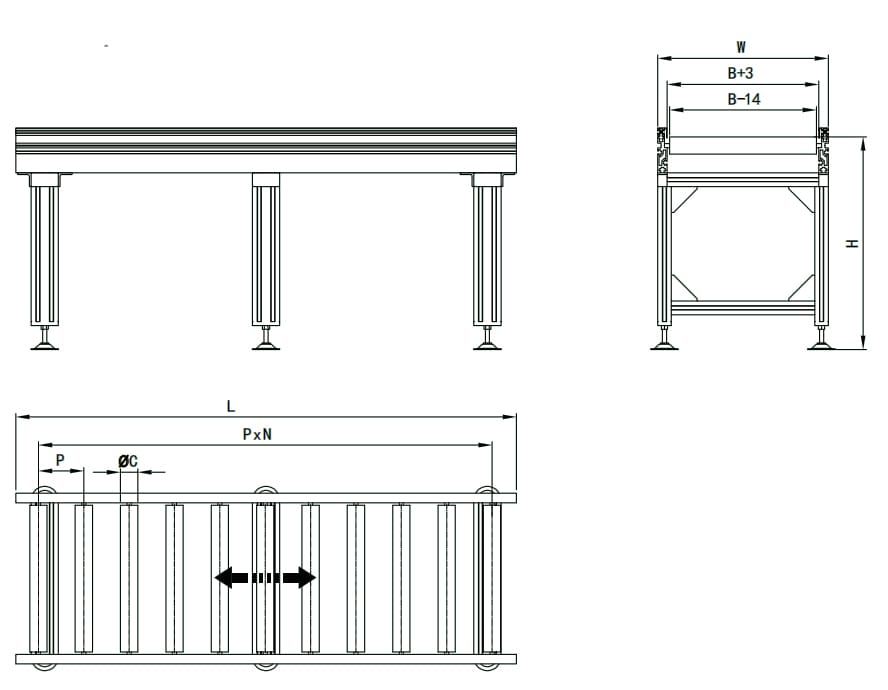 TOSH-RL-P Roller Conveyor
Working Principle of Non-powered Roller Conveyor Line
The non-powered roller conveyor relies on a simple yet effective principle. And it can move materials from one point to another without the assistance of power:
- Material Positioning: Begin by placing goods at the non-powered roller conveyor’s start. These items may range from papers to fabrics of different dimensions and forms.
- Roller assembly: Central to the conveyor, rollers are arranged uniformly on a supporting frame to create the conveying surface. These cylindrical components, often crafted from metals or composite materials. Also boast a finely textured surface to enhance grip with the items they transport.
- Motion through Friction and Inclination: Once items are set upon these rollers, they begin advancing due to the traction created between their surfaces and the rollers’. A deliberate tilt applied to the setup compels the goods to glide along the rollers’ cuscinetti, propelled by both friction and gravitational pull.
- Regulation of Movement: The conveyor’s efficiency hinges on the strategic angle of the rollers and their separation – factors that determine the rate and steadiness of item movement. Correct calibration prevents congestion and slippage, ensuring a smooth transit.
- Destination Reach: Guided by the roller’s trajectory, items eventually arrive at the conveyor’s end, where they can be collected for further processing or transferred to the next stage of operation.
Overall, this method capitalizes on the passive forces of friction and gravity. And it offers an economical and flexible solution for material handling across diverse applications.
Analysis of Application
Application of Non-powered Roller Line
- Production workshop: product assembly, finished goods transferring
- Logistics warehouse: cargo loading, unloading, and sorting work
- Distribution center: carton and packaged goods conveying
 roller conveyor cases
Advantages and Disadvantages
1. Advantages of Non-powered Roller Line
- Low cost: Compared with other conveying equipment, the cost of unpowered roller lines is low and easy to install and maintain.
- Small footprint: We can customize the unpowered roller line according to actual needs, effectively utilizing space and saving floor space.
- High transportation efficiency: The unpowered roller line uses the material’s own gravity to transport materials. It is faster and can realize batch transportation.
2. Disadvantages of Non-powered Roller Lines
- Material restrictions: Due to limitations in transportation methods, the non-powered roller line is only suitable for some materials with relatively fixed physical properties. And the types of materials that we can convey are subject to certain restrictions.
- Height restriction: Due to the effect of gravity, the unpowered roller line is only suitable for some conveying tasks with lower heights. But it is not suitable for conveying tasks with higher heights or that require changing directions.
- Safety risks: During long-term operation of the unpowered drum line, safety risks. Such as blockage may occur due to excessive stacking of materials, or fire may occur due to the friction of materials on the drum
How to Avoid the Shortcomings of Non-powered Roller Conveyor Lines?
In order to avoid the above problems, we could take the following improvement measures:
- When designing the unpowered roller line, we should select the appropriate conveying method. And it is according to the properties and transportation needs of the specific materials to ensure that the materials can be transported smoothly.
- Carry out regular maintenance and upkeep on the equipment. And arrange cleaning in time to avoid blockage caused by the accumulation of materials.
- In the system design, try to reduce the number of turns and the vertical height of the material to avoid safety risks.
In sintesi, as an effective material conveying equipment, the unpowered roller line has certain application advantages and a scope of application. But it is also necessary to pay attention to its shortcomings and precautions during actual use to ensure its safety and stability.