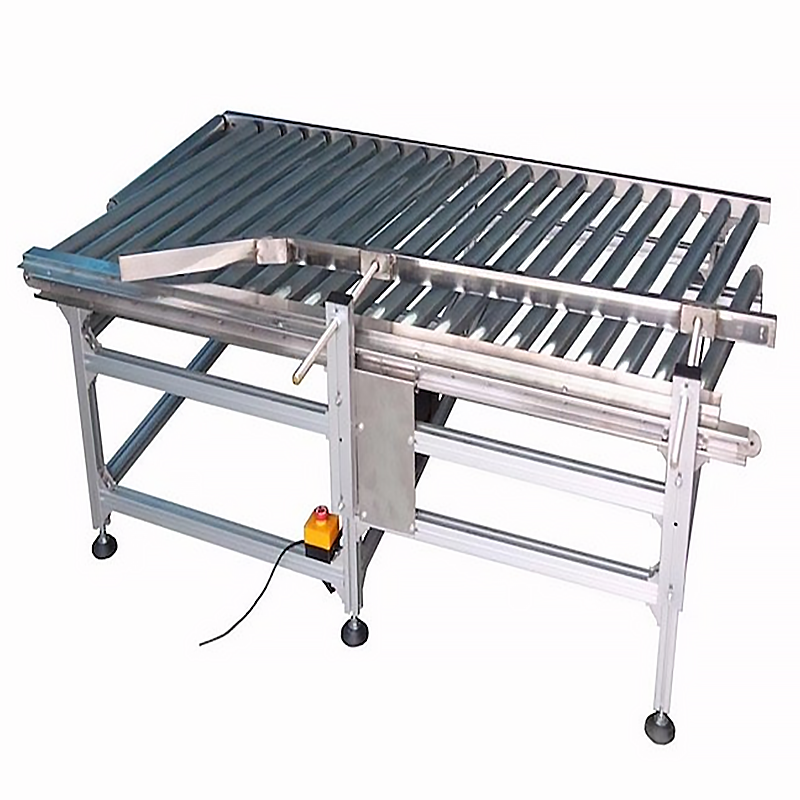
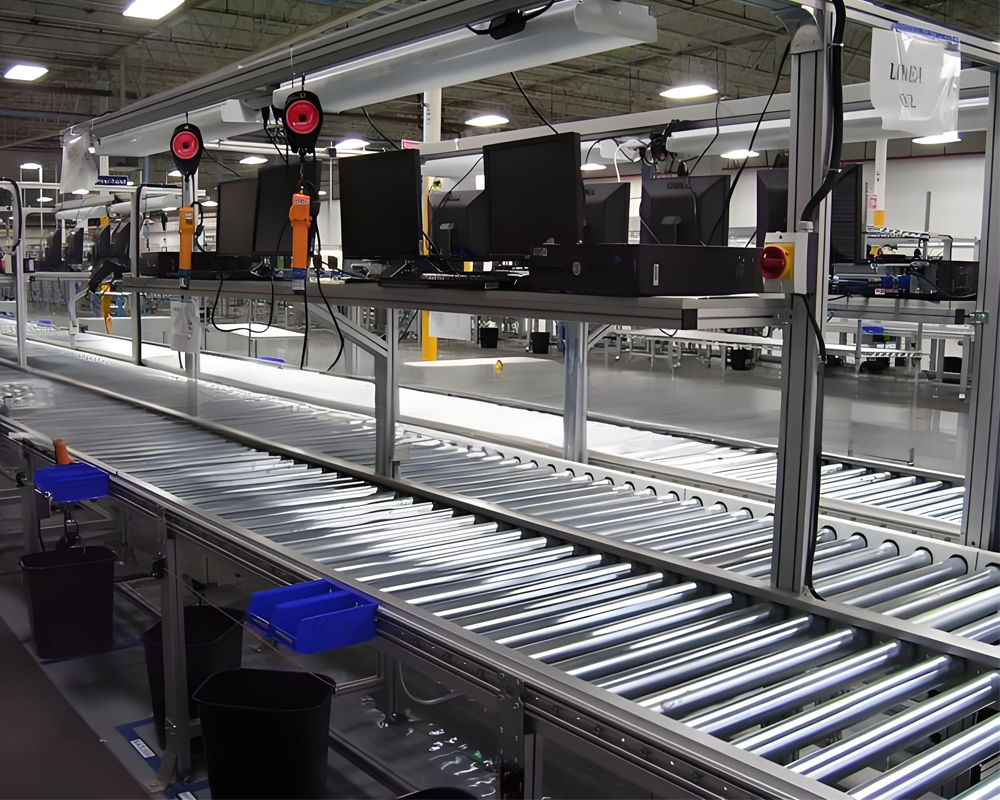
Chain Driven Live Roller Conveyor is a robust material handling system for heavy loads. It consists of cylindrical rollers mounted on a rigid frame, driven by motorized chains to move goods smoothly and reliably.
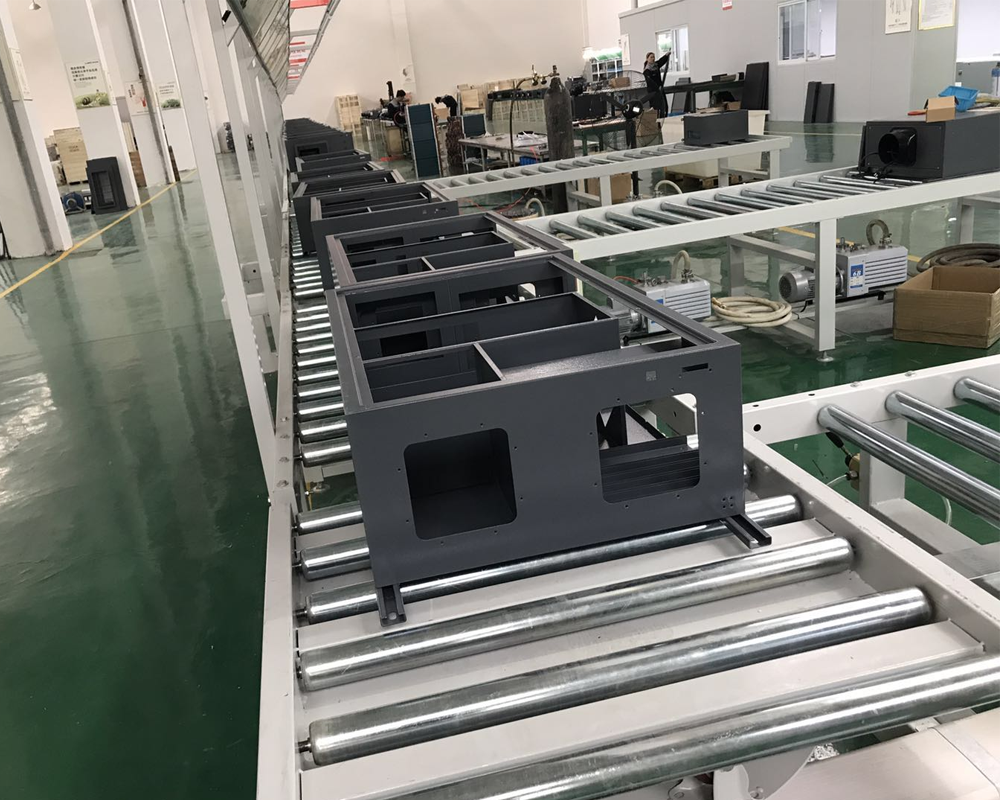
Chain‑engaged live roller conveyor is a heavy‑duty material handling system with chain‑driven rollers to move items forward. It is engineered for heavy loads such as steel sheets, beams, drums, tires and palletized goods, suitable for flat‑placed or pallet‑based heavy items. Widely used in parcel distribution, product accumulation and automotive tire handling, it streamlines material handling efficiency.
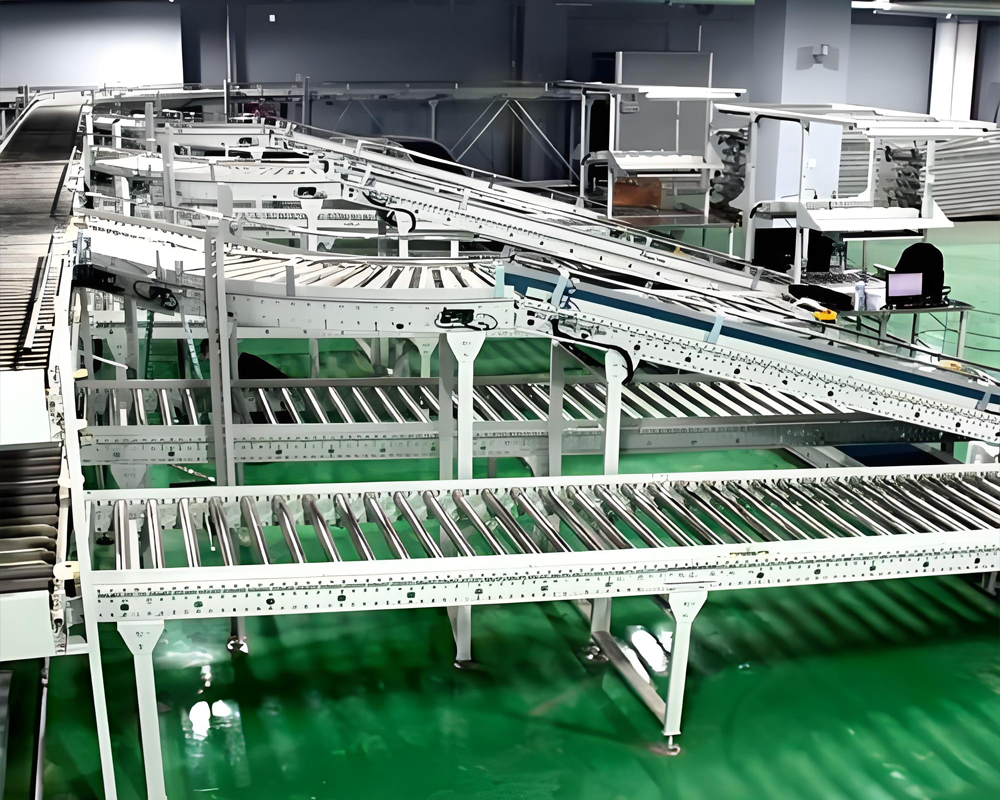
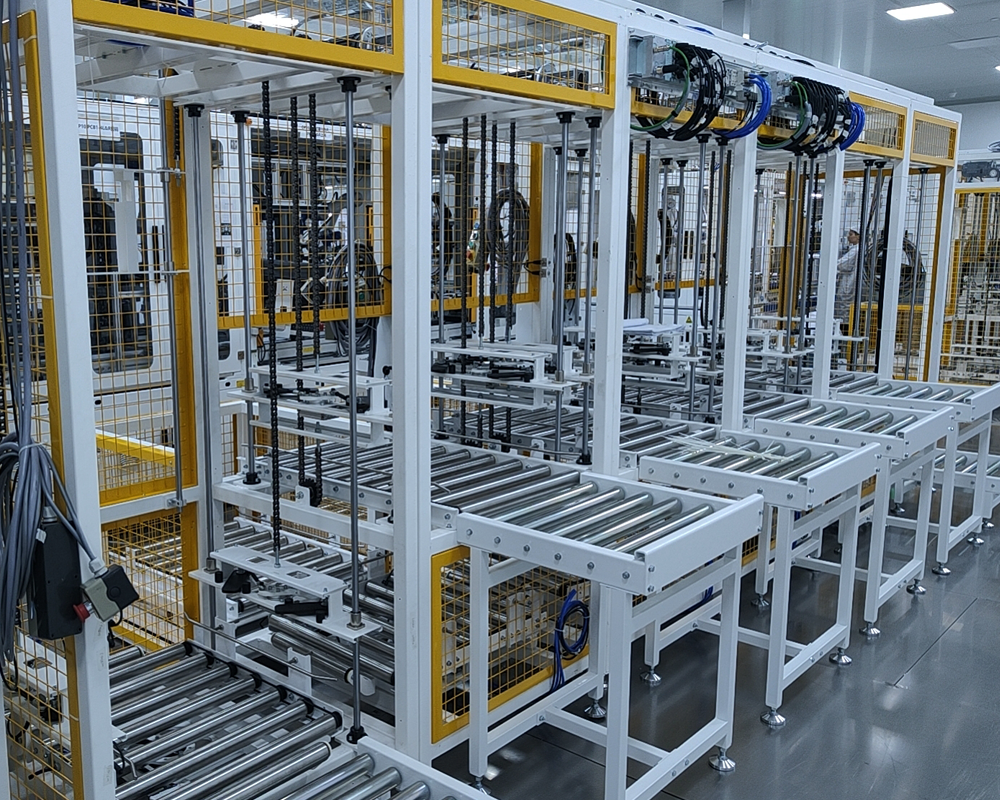
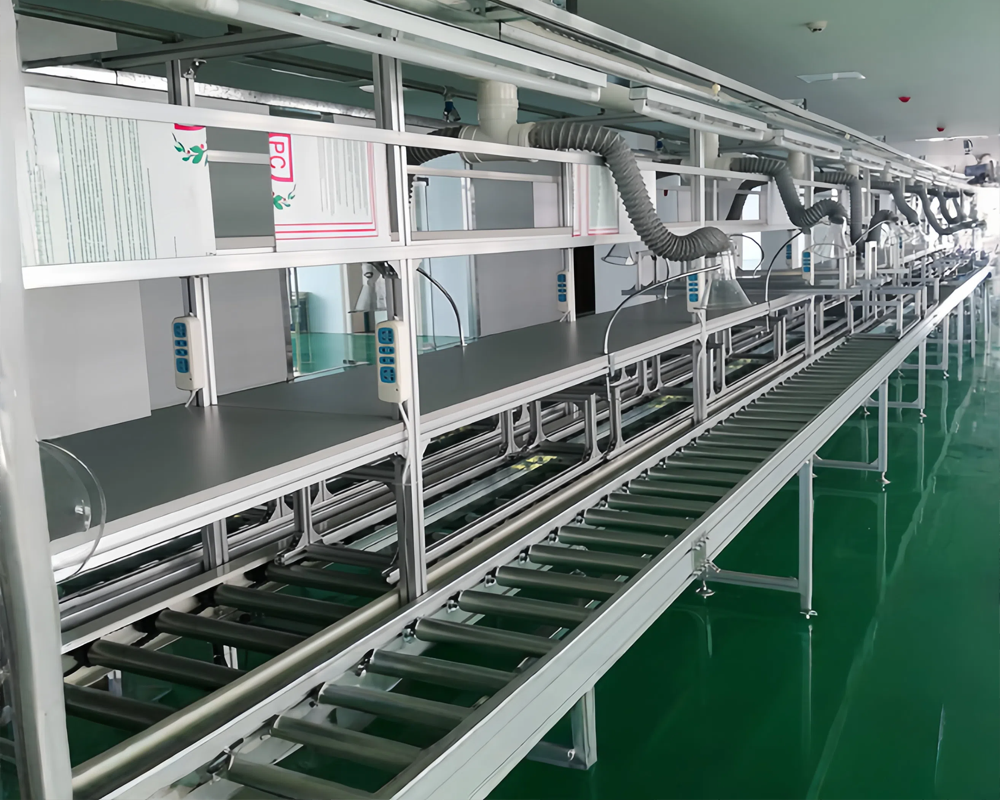
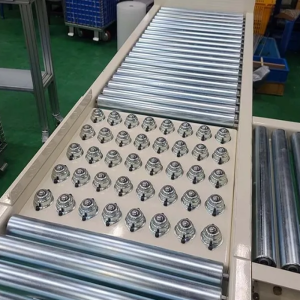
We provide customized solutions with curves, turntables, accumulation zones and straight sections to match specific operational requirements.
Market demand is driven by the need for reliable, high‑efficiency material handling equipment across warehousing, food processing, automotive manufacturing, electronics and mining sectors. The trend toward automated and digitalized production and logistics further increases adoption of chain‑driven roller conveyors.
Manufacturers keep innovating to improve performance, appearance and environmental compliance. Key innovations include low‑friction, long‑life chains, corrosion‑resistant rollers, energy‑saving drive units and modular, flexible designs for quick system configuration.
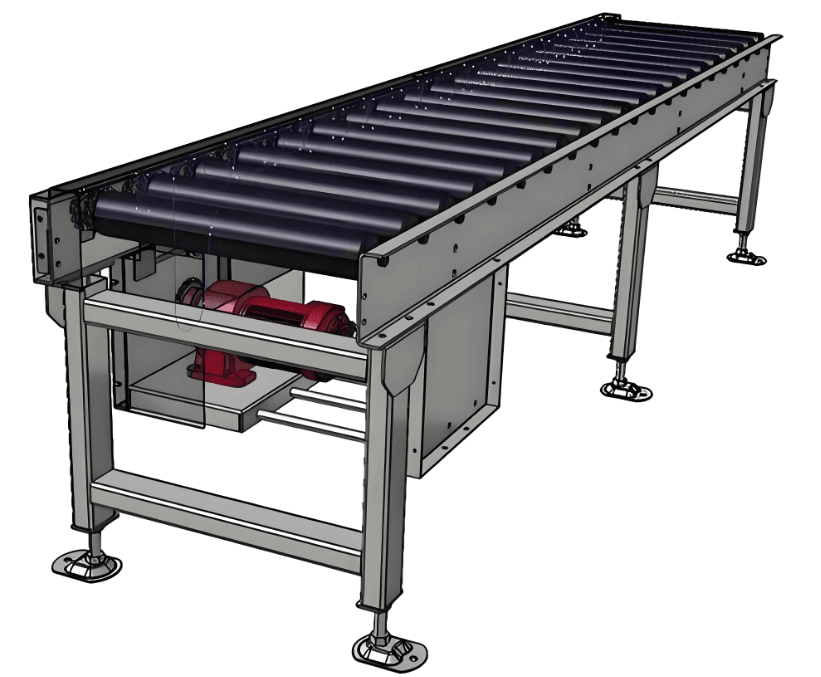
The roller conveyor system primarily consists of rollers, support frames, power units, and passive components. Besides, transmission chains, among other elements, and is characterized by:
1. Robust Transport Capability: High load capacity designed for heavy‑duty logistics; roller quantity and size can be customized for large‑volume, high‑efficiency operation.
2. Extended Transport Reach: Modular assembly enables long, continuous conveying lines to meet large‑scale production and warehousing needs.
3. Versatile Compatibility: Suitable for various shapes and sizes: cartons, drums, packages, and palletized goods, with strong adaptability for different materials.
4. Consistent Performance: Chain‑driven mechanical drive ensures stable, smooth operation with low noise and reliable long‑term performance.
5. Ease of Upkeep: Simple structure for easy maintenance; routine cleaning and lubrication keep the system running efficiently with minimal downtime.
Structures
Let’s talk about the main parts of a roller conveyor system:
Rollers: Core components of the conveyor, usually made of seamless steel or aluminum pipe with wear‑resistant coating for long service life.
Frame: Main supporting structure, manufactured by welding or casting according to load requirements, ensuring stability and rigidity.
Driving Device: Power unit including motor, reducer, and transmission shaft, providing stable power and controlling conveying speed.
Driven Device: Works with the transmission chain to ensure smooth and accurate movement direction.
Transmission Chain: Connects the driving device and rollers, transferring power to drive roller rotation for material conveying.
Select a suitable model and specifications according to actual requirements, and arrange the layout based on site conditions.
Inspect all components before operation; replace damaged or worn parts in time.
Connect the power supply and air source as instructed, then debug the equipment parameters.
Place goods on the conveyor with consistent direction and balanced center of gravity.
Start the equipment and check smooth operation; stop immediately if any abnormality occurs.
Operators must keep a safe distance and avoid contact with moving parts.
Stop the equipment and unload goods after reaching the destination.
Perform regular maintenance: keep clean and lubricate moving parts.
In Conclusion
A roller conveyor system mainly consists of rollers, bearings, and drive mechanisms. Materials move by rolling on roller surfaces; rollers are key parts, usually made of stainless steel or carbon steel with a large contact area to increase friction. Roller rotation drives goods forward for smooth material movement.
A chain-driven roller conveyor uses chains to connect rollers and the motor, transmitting power to rotate the rollers. It realizes continuous conveying by chain circulation, ensuring stable and efficient material transportation for heavy‑load applications.